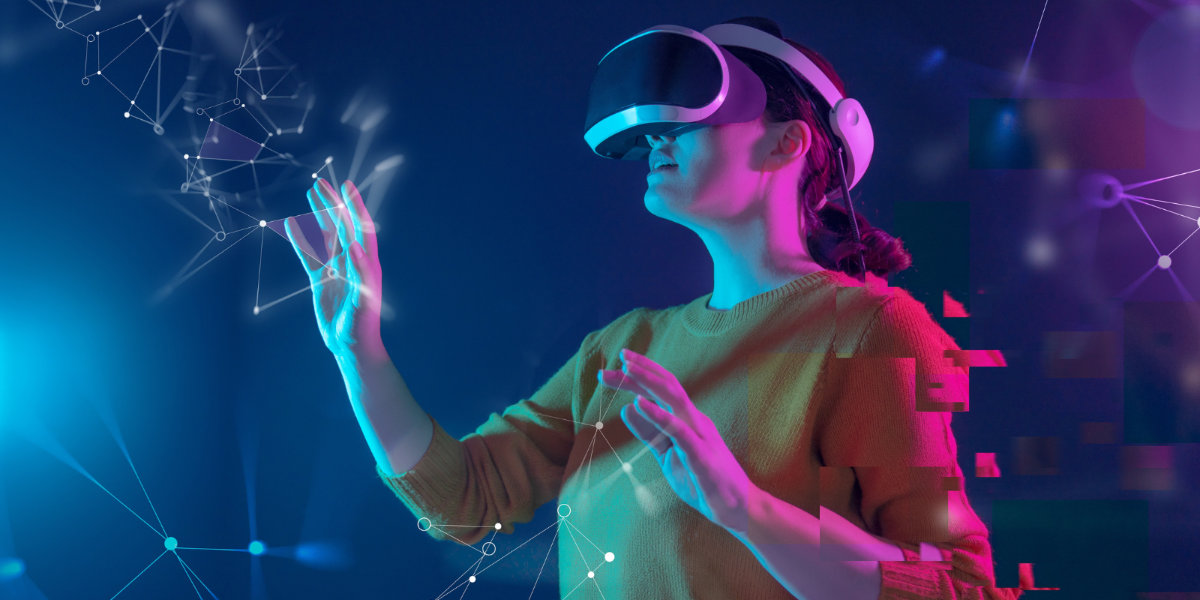
Imagine Solving Real Problems... In a Virtual World
When you hear the word "Metaverse," you might think of gaming or futuristic tech—but there's so much more to it. Today, the metaverse is becoming a powerful space where real-world problems are being solved in surprisingly creative ways.
From virtual classrooms that bring education to remote areas, to mental health therapy that feels safe and private, the metaverse is turning into a space where people can connect, learn, heal, and build solutions—together.
Let’s take a look at some inspiring ways the metaverse is already making a difference.
1. Learning From Anywhere in the World
The metaverse is opening doors to quality education, especially in places where resources are limited. Imagine students in rural areas attending a science class inside a 3D virtual lab, or exploring space in a virtual NASA tour—without ever leaving home.
Platforms like VictoryXR are working with schools and universities to create virtual campuses, where students join as avatars and interact just like in a real classroom.
Ref.
VictoryXR Virtual Campuses
2. A New Way to Support Mental Health
Mental health is a growing concern, and the metaverse is offering some new ways to help. Virtual spaces can create safe environments where people feel more comfortable opening up.
One such platform, Innerworld, lets users talk to trained guides and peers in calming, immersive settings—perfect for anxiety or emotional stress.
Ref.
Innerworld - Mental Health in the Metaverse
3. Training Doctors and Saving Lives
The metaverse is also being used in medical training and surgery planning. With realistic simulations, doctors and medical students can practice procedures in VR before they ever touch a real patient.
For example, Osso VR offers hands-on surgical training in a virtual setting—helping improve precision and confidence.
Ref.
Osso VR Medical Training
4. Planning Smarter Cities and Disaster Response
Governments and city planners are using metaverse-style simulations to plan cities better, test infrastructure, and prepare for emergencies.
A great example is Virtual Singapore—a full 3D model of the city used for real-time planning and problem-solving.
Ref.
Virtual Singapore
5. Better Remote Work and Collaboration
Working from home has become common, but let’s face it—video calls can only do so much. The metaverse is bringing people together in virtual offices where they can meet, brainstorm, and feel more present.
Tools like Microsoft Mesh are helping teams meet as avatars, share 3D files, and collaborate like they’re in the same room.
Ref.
Microsoft Mesh
Final Thoughts
The metaverse isn’t just a buzzword—it’s a growing platform that’s helping people solve real-world problems in smarter, more human ways. Whether it’s helping a child learn, supporting someone through anxiety, or training a surgeon to save lives, the potential is huge.
And the best part? This is just the beginning.